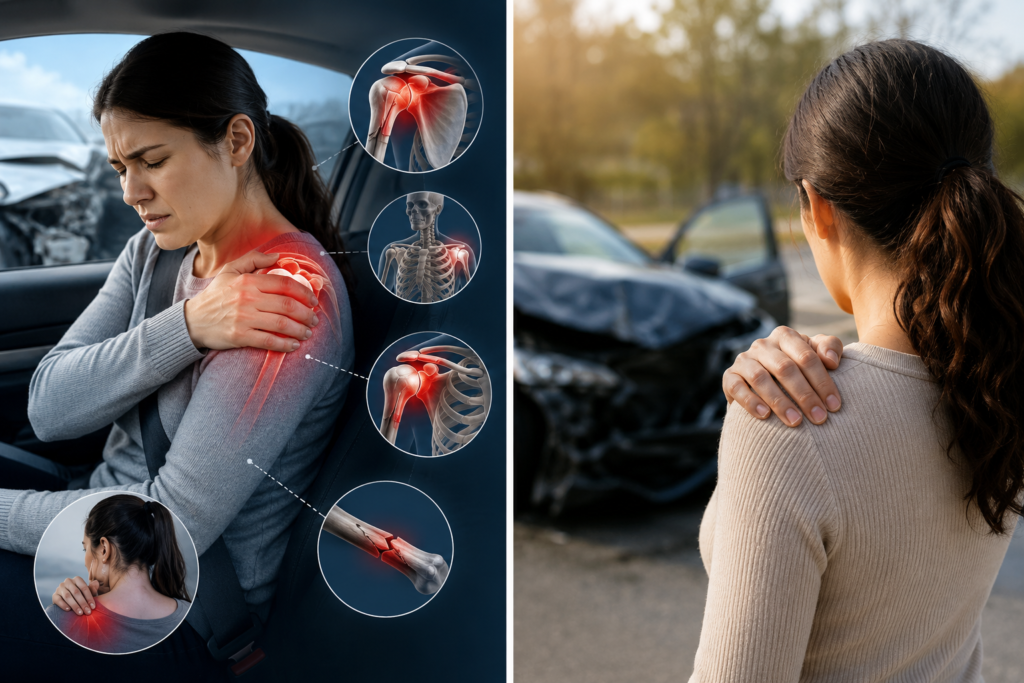
After a car accident, you can experience different types of auto injuries, with shoulder pain being one of the most common.
You may feel it on the spot after the incident or a few days later, depending on your circumstances. But here’s the thing: not every time can you diagnose the symptoms easily.
And that’s because its symptoms can sometimes be mistaken for those of other sorts of pain or injuries. In this scenario, it is even more important to have a proper evaluation and diagnosis for timely treatment.
In this article, we’ll discuss the common causes of shoulder pain, delayed symptoms, how shoulder injuries are diagnosed and treated, and the recovery process. Let’s start.
Why Does Shoulder Pain Happen After a Car Accident?
The possibility of shoulder pain after a car crash is quite high due to sudden jolts. These jolts lead to physical trauma to the complicated shoulder bone, muscle, and tissue structures, resulting in injury, swelling, and shoulder pain.
Pressure from the seat belt can cause shoulder pain, while bracing with the steering wheel can strain the shoulder muscles and joints.
In addition, sudden jolts cause extensive soft tissue trauma (tearing of muscles and straining of tendons) and heavy stress on the fragile joints connecting your shoulder to the torso.
This brutal combination of physical trauma and stress easily leads to some of the most common shoulder injuries after an accident.
Common Causes of Shoulder Pain After a Car Accident
All accidents are unique, but some injuries result in chronic or persistent shoulder pain. Some of the most common causes include:
- Rotator Cuff Injury
Rotator cuff refers to the tendons and muscles that hold your arm within its socket. An injury in a car accident may lead to either tearing or inflammation of these tissues. The victim will have a deep, dull ache or an intense feeling of weakness. A good indicator is pain when lifting the arm.
- Shoulder Strains and Sprains
A car accident can stretch the shoulder joint to its limit, causing sprains and strains. Sprains usually refer to an injury to the ligaments, that is, the tissues that connect bones. Strains, on the other hand, usually affect the tendons and muscles.
- Shoulder Impingement
Impingement involves narrowing the space between the shoulder blade and the humerus. A crash causes an inflammatory response. Hence, the movement is painful due to irritation. A sharp and clicking sound can be heard when the arm is raised.
- AC Joint Injury (Shoulder Separation)
The AC joint is the joint between the collarbone and the shoulder blade. Due to the high forces involved in crashes, seatbelt injuries are common, as this pressure forces separation between the joints. There is sharp pain in the upper part of the shoulder, which may be accompanied by a bulge.
- Dislocated Shoulder
A severe trauma or a direct hit by the dashboard causes the shoulder to be forced out of joint and the top of the arm bone to be out of its normal position. This causes a painful dislocation with visible deformity, swelling, and limited range of motion.
- Fractures
A crash causes the shoulder girdle bones to break. The most common bone injuries are the clavicle, scapula, and humerus. Research shows clavicle fractures make up about 2.6% of all fractures and 44% of shoulder girdle fractures, the most commonly broken shoulder bone. The symptoms for these fractures involve intense pain, bruising, and grinding.
Symptoms of Shoulder Pain After a Car Accident
Shoulder pain after a car accident is common and requires quick medical care. You might feel it right away. Or, your pain may appear hours or days later as adrenaline wears off.
Watch for these warning signs:
- Pain: A sharp or dull ache that spreads to your neck, chest, or arm.
- Swelling: The joint may look puffy or inflamed.
- Bruising: Discoloration can appear on your upper arm or collarbone.
- Stiffness: The joint feels very tight and hard to move.
- Limited Range of Motion: You cannot move your arm through its normal motions.
- Clicking: You hear a popping or clicking sound when you move your arm.
- Weakness: Your arm feels too weak to lift items.
- Difficulty Lifting Arm: You cannot reach overhead or do simple tasks.
- Pain at Night: The joint aches while you rest, making sleep difficult.
- Tingling: A pins-and-needles feeling in your fingers.
- Numbness: A total loss of feeling in your arm or hand.
Delayed symptoms happen because your body hides minor damage to cope with the shock of a crash. Always get checked by a doctor. Early care helps you heal faster and prevents long-term problems.
Can Shoulder Pain Be Delayed After a Car Accident?
Yes, shoulder pain can be delayed after a car accident. Many people feel fine right after a crash but wake up sore hours or days later. This delayed onset is a very common reaction to sudden physical trauma and the body’s natural survival responses.
Why Symptoms Appear Later
- Adrenaline: During a crash, your body enters “fight-or-flight” mode. It floods your system with adrenaline and endorphins. These act as powerful, natural painkillers that temporarily block discomfort. This is a real physiological response, not just a feeling.
Studies show trauma triggers natural pain-blocking chemicals, which is why an injury can feel minor at first and worsen days later. When this chemical surge wears off, you finally feel the pain.
- Inflammation: The inflammatory process builds slowly. When your body sends fluid to damaged areas to heal them, swelling and pressure in those areas increase. Inflammation peaks between 24 and 72 hours after the accident.
- Muscle Spasm: As a result of the impact, your muscles contract instantly to defend the joints from any further harm. Muscle spasm tends to mask other injuries, and the pain will only occur when the muscles start to relax later on.
- Soft Tissue Injuries: Injury of soft tissues, including muscle, tendon, and ligament, is usually not immediately painful. Strains or tears of the rotator cuff get more painful as you begin moving again.
- Delayed Soreness: Similar to the pain you experience after exercising, delayed soreness results from torn muscle fibers and bruised tissues.
How Is Shoulder Pain Diagnosed?
Diagnosing shoulder pain requires a thorough, multi-step approach. Doctors combine your background and physical exam findings with medical imaging.
Diagnosis Steps
- Medical History: Your doctor reviews your past health and asks how, when, and where your pain started.
- Physical Examination: The doctor checks for swelling, bruising, or bone bumps.
- Range of Motion Testing: You move your arm in different ways. This shows if stiff joints restrict your movement.
- Strength Testing: You push against the doctor’s hands. Weak muscles often point to tendon problems.
- Neurological Examination: The doctor checks your reflexes and feelings to ensure the pain does not come from pinched nerves in your neck.
- Imaging and Tests:
- X-Rays: Clear pictures of bones. They find bone spurs, arthritis, and fractures.
- MRI: Uses strong magnets to provide detailed views of soft tissues, such as rotator cuff tendons and ligaments.
- Ultrasound: Uses sound waves. It is used when appropriate to view tendons and bursae while you move your arm.
Why Diagnosis Matters
The shoulder is a complex joint. Many different issues can cause the same type of pain. Treating a frozen shoulder with heavy lifting will make it worse. Likewise, ignoring a torn tendon delays healing. A clear diagnosis avoids guessing and leads to a safe, fast recovery.
Treatment Options for Shoulder Pain After a Car Accident
Treatment for shoulder pain depends on the injury. Common options include rest, ice packs, and anti-inflammatory drugs (like ibuprofen). Doctors may also suggest physical therapy, injections, or surgery. A car crash can cause different types of shoulder pain.
Here is how doctors treat them:
1. Ice and Heat
- Ice Packs: Apply to the shoulder for 15 minutes. Do this several times a day for the first 48 hours to reduce swelling.
- Heating Pads: Use these after 72 hours. Heat relaxes tight muscles and boosts blood flow.
2. Physical Therapy (PT)
A physical therapist will give you safe stretches and exercises. Physical therapy helps you build strength and move your shoulder freely. Combining manual therapy with exercise is more effective than exercise alone. A randomized trial found that this combination led to better long-term outcomes for shoulder pain.
3. Medications
Doctors often recommend NSAIDs (Nonsteroidal Anti-Inflammatory Drugs). These are over-the-counter medicines like ibuprofen that fight swelling and pain.
4. Injections
If pills and PT do not work, your doctor may try corticosteroid injections. These are strong medicines injected directly into the shoulder joint to reduce swelling.
5. Surgery
Severe injuries like torn tendons or broken bones may need surgery. Surgeons can repair damage to get your shoulder working again.
Recovery Timeline for Shoulder Pain After a Car Accident
Recovering from a car accident’s shoulder pain involves a highly personal timeline. Healing does not follow an exact schedule. Instead, your recovery progress relies on a few key factors:
- Injury type and severity: Broken bones, torn muscles, and severe sprains take much longer to heal than minor strains or bruising.
- Age and health: Younger and highly active people often heal faster than older adults. Good general health speeds up tissue repair.
- Early treatment: Starting medical care immediately after an accident helps control inflammation. This reduces the risk of long-term pain.
- Rehabilitation: Consistent physical therapy helps rebuild strength and restores your movement.
Each person’s body responds differently to rest and therapies. Many people feel better in a few weeks with conservative care. However, complex injuries may require surgery and take months to fully heal. Sticking to your doctor’s rehabilitation plan is vital.
When Should You Seek Professional Care?
A minor pain in the shoulder region following a motor vehicle accident could heal through proper rest, but the continued presence of any pain is something that cannot be taken lightly. One is advised to visit a doctor if the pain persists beyond a few days, hinders one from lifting or moving their arms, and affects other aspects of life.
Numbness, tingling, marked weakness, progressive swelling, discoloration, or a deformed shoulder indicates a more serious condition that warrants medical intervention.
Visit the emergency room when there is an exposed bone fracture, reduced circulation in the affected area, a deformity, or the inability to move the shoulder.
Conclusion
There are many instances in which a headache is accompanied by neck pain because of their shared innervation by related nerves and muscles, and their involvement of the same joints. First and foremost, it is important to determine the cause of such a situation. If it does not improve, you should consult an expert.
At Allied Chiropractic Therapy, Dr. Applegate and his associates offer personalized consultations to find the origin of your pain.
Frequently Asked Questions
Q1. Can shoulder pain appear days after a car accident?
Yes, shoulder pain can easily appear days after a car accident, often because adrenaline and shock mask injuries while inflammation, muscle stiffness, or soft tissue damage slowly develop over time.
Q2. Is shoulder pain after a car accident always caused by whiplash?
No, shoulder pain after a car accident is not always caused by whiplash; it can also result from direct impact, bracing the crash, or damage to the bones, ligaments, and tendons.
Q3. How long does shoulder pain after a car accident last?
Shoulder pain after a car accident typically lasts a few weeks for minor soft tissue strains, but severe injuries or nerve damage can persist for several months or even years.
Q4. Can physical therapy help shoulder pain after a car accident?
Yes, physical therapy can help shoulder pain after a car accident by restoring your range of motion and strengthening the injured muscles.
Q5. When is imaging needed for shoulder pain?
Imaging is needed after severe injuries, for shoulder instability, when pain is severe and fails to improve after several weeks of rest, or when a doctor suspects torn tissues, tumors, or infections.