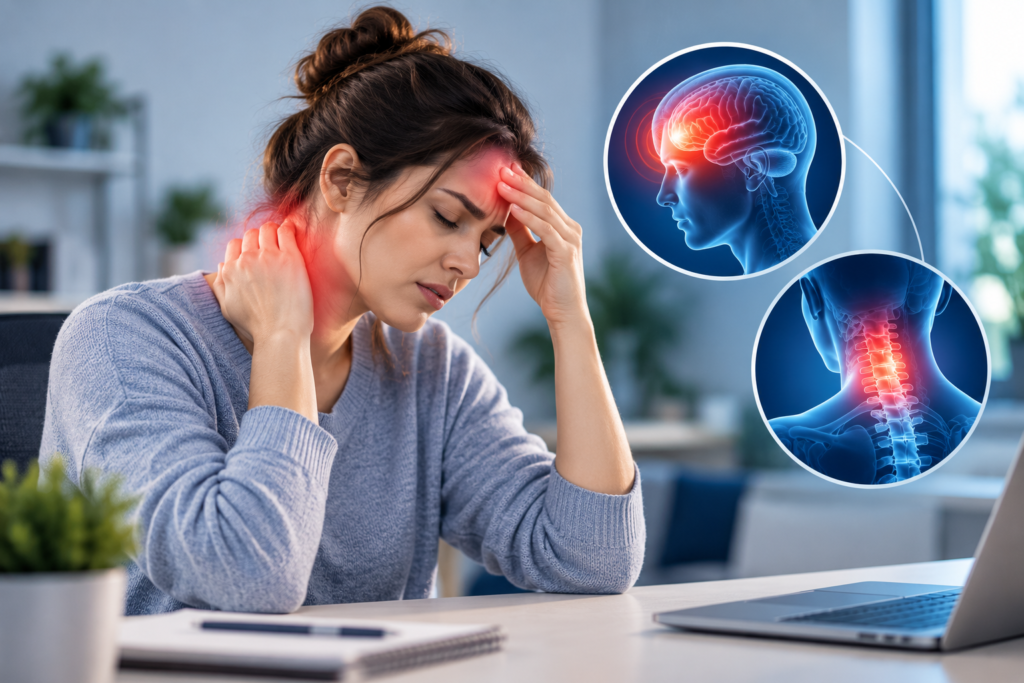
Neck pain and headache often happen together, and that’s the worst part. Because honestly, that makes the daily tasks much harder. And in this situation, even simple things like working, riding in a car, or sleeping become painful. Frustrating, right? Well, there can be many causes for this type of pain, like Tight muscles, bad posture, joint problems, stress, injury, and whatnot. Health conditions can sometimes cause it, too.
Although most people feel relief with rest and simple home care, the problem may be bigger in a few circumstances. And that’s exactly when it becomes mandatory to consult with a doctor. At Allied Chiropractic Therapy, our team provides comprehensive assessments and personalized treatment plans to help identify the underlying cause of headaches and neck pain and support long-term recovery.
Why Do Headaches and Neck Stiffness Often Occur Together?
When the muscles become tight or the neck joints become irritated due to poor posture, stress, an injury, or muscle strain, pain signals can travel from the neck to the head. As a result, pain that starts in the neck may be felt as a headache.
One common cause is a cervicogenic headache, which develops from problems in the neck, such as joint stiffness, muscle spasms, or irritated nerves.
Tension headaches are also common and are usually caused by stress and tight muscles in the neck and shoulders.
In some people, migraines may begin with neck pain or stiffness before the headache starts.
Although most headaches with neck pain are not serious, seek immediate medical care if you experience a sudden, severe headache along with neck stiffness, fever, confusion, or difficulty touching your chin to your chest.
These symptoms may indicate a serious medical condition, such as meningitis, and require urgent evaluation.
Common Symptoms of Neck Pain and Headache
There are so many common symptoms that may occur alongside headaches and neck stiffness. Headaches and neck stiffness have occurred together. Symptoms vary from person to person.
Here are the most common symptoms that we discuss below:
- Pain in the neck: It is the muscle and joint discomfort in your neck.
- Reduced range of movement: You would have a difficult time moving your head upwards, downwards, sideways, and generally in any direction.
- Pain in the shoulders: The pain may extend from your neck to your upper back or shoulder blades.
- Pain when rotating the head: This involves the aching getting more intense when you turn your head in either direction.
- Tightness in muscles: You have tight muscles in your neck and upper shoulder region.
- Pain at the base of the neck: The pain is located around where the neck and head connect.
- Light sensitivity: Pain or sensitivity to bright lights is experienced, something that affects most migraine patients.
- Fatigue: The feeling of tiredness and exhaustion.
What Causes Headache and Neck Stiffness and Pain?
Neck pain and headache often happen together. Tight neck muscles, irritated nerves, or stress on the neck joints can send pain up to the head.
This is usually caused by bad posture or stress. But sometimes, it can be a sign of a more serious health problem.
1) Tight Muscles
Shoulder muscles, neck muscles, and scalp muscles are always tensed. These muscles tend to get strained if they work excessively beyond their capacity or are kept motionless for a prolonged period of time.
2) Bad Posture and Forward Neck Position
Looking down at phones or hunching over computers for a long time causes “tech neck.” This makes your head lean forward. For every inch your head moves forward, its weight on your neck increases greatly. This puts heavy strain on the neck muscles and bones.
The numbers behind this are more dramatic than most people expect. According to the NPR Organization, tilting the head forward just 15 degrees increases the force on the neck to 27 pounds, and at a 60-degree angle, common while looking down at a phone, that force can reach 60 pounds.
3) Tension Headaches
These are the most common types of headaches. They feel like a tight band of pain around your forehead. This isn’t a small category, but instead, it is the headache type most people will experience at some point. Clinical research shows that tension-type headaches have a lifetime prevalence ranging from 30% to 78% of the general population, making them the most common headache disorder worldwide. They often happen when you hold your head in one position for too long or experience mental strain.
4) Cervicogenic Headaches
These are headaches that actually start in the neck. The pain usually stays on one side of your head. This isn’t a rare or obscure diagnosis; it shows up often in clinical practice. Research published by Neurology India found that cervicogenic headaches account for approximately 15% to 20% of all chronic headache cases evaluated in clinical settings. They worsen when you move your neck or stay in certain positions.
5) Sleeping Position
Stomach sleeping or even having an excessively high or low pillow leads to neck twisting. The strain on your neck muscles because of such positioning leads to stiffness of the neck and subsequent pain.
6) Stress
When you feel worried or anxious, you may tighten your shoulders and jaw without knowing it. This constant clenching and tightening creates hard knots in your neck and scalp that lead to head pain.
7) Cervical Joint Dysfunction
Your neck joints permit your neck bones to bend, which allows your head to move. If these joints get irritated and damaged, they get locked. As a result, your neck becomes stiff and produces pain signals to your head.
8) Pinched Nerve
A pinched nerve occurs when a bone or herniated disc squeezes the nerve in your neck.
Less Common Medical Conditions
While all the above reasons are usually not harmful, there can be times when a stiff neck and a headache may be an indication of serious medical situations:
- Meningitis: Meningitis is a deadly infection of the tissues surrounding the brain and spinal cord that produces severe head pain and stiff neck and can lead to high fever.
- Infection: Any infection in the body can cause inflammation and pain, including a tight neck and head pain.
- Trauma: Traumatic events such as a car accident or a fall can cause quick jerks referred to as whiplash that can cause injury to muscles, bones, and ligaments.
How to Tell If Your Symptoms May Be Muscle-Related
Muscle soreness gives you insight into the everyday tension you experience. Pain pattern analysis can give clues that soft tissues are the source of the soreness.
- Discomfort because of posture: Your muscles become sore due to poor posture since they do not have sufficient support.
- Discomfort because of prolonged seating at the work desk: By hunching forward while using the computer, you may strain your neck and back muscles and become stiff.
- Stiffness in the morning upon awakening: Stiff muscles may occur when you get up in the morning. Unlike inflammation-related issues, muscle stiffness resolves quickly.
- Improves from activity: Walking around and stretching improves the blood flow to the muscles and loosens them.
- Trigger points: Trigger points are knots or tight areas within the muscle. Pressing trigger points results in sharp or dull pain.
Home Care Strategies That May Help
If the headache and neck stiffness you experience are relatively mild, some minor changes in your behavior may help you to cope with discomfort and wait until the symptoms pass.
- Let your neck rest, but avoid staying in bed the whole day. Usually, movements are recommended over long immobility. In case of muscle tension, heat treatment is applicable (heating pad/baths).
- It is important to stretch the neck without doing anything that would increase pain. You must consume enough water since dehydration may be the cause of a headache.
- If you use computers for work, change your posture; adjust your seat and computer position to maintain a comfortable head position. Avoid prolonged screen hours. Take a small break from sitting every half hour.
- Good sleep is important as well. Choose an appropriate pillow that will allow you to maintain the natural position of your neck while sleeping.
When Should You Seek Professional Evaluation?
Headaches and neck stiffness may sometimes be resolved by themselves. But never ignore them if they do not subside in a few hours or days
Seek the assistance of a medical specialist if you experience pain for several days, repeatedly, and/or when the movement of the head becomes painful and hard. It is necessary to visit an expert when pain interferes with your daily activities and work.
Especially if you have numbness or weakness in your arm or hand, you need to consult a specialist, as it is one of the signs of possible nerve irritation.
Further evaluation might be needed in case the frequency of your headaches increases.
How Chiropractic Care May Help Depending on the Cause
Treatment begins by understanding the root cause behind your problems. The first step at Allied Chiropractic Therapy will be an examination rather than a universal approach.
Our doctor will test your posture, range of motion in your neck, tightness of the muscles, and joint function. That will reveal possible causes behind your problems.
Based on the results of your examination, treatment can consist of spinal manipulation, soft tissue work, and simple exercises.
You may also get instructions related to your workstation and proper posture, which could relieve some stress from your neck.
The best part? Each treatment at our clinic is totally customized since each patient is different.
Simple Habits That May Help Prevent Future Episodes
Little things can add up over time. Make sure you follow some quick, simple habits to avoid such pain episodes in the future:
- Arrange your workstation such that your computer screen is at eye level and your shoulders are loose.
- Exercise regularly to maintain your fitness, including stretches during the week.
- Drink plenty of water, manage stress, and ensure you get enough sleep each day.
- If you tend to sit for many hours in one place, get up and stretch each hour.
When You May Require Emergency Medical Care
Headaches and stiff necks do not need an immediate trip to the emergency room or hospital. There are some cases, however, where emergency intervention is needed.
An emergency is present if you suffer from a sudden onset of a severe headache wherein you did not feel anything wrong before.
But if you have these symptoms in addition to headaches, you need to go to see the doctor immediately:
- Fever
- onfusion
- Difficulty speaking
- Clumsiness
- Fainting spells
- Arm and leg weakness
Moreover, when these symptoms occur due to hard falls, sports injuries, and car crashes, you need to visit the hospital immediately.
Why Choose Allied Chiropractic Therapy?
To address the underlying causes of your problem at Allied Chiropractic Therapy, every patient undergoes an initial assessment.
Our approach emphasizes education, exercise, and conservative management. Your treatment plan is made just for you. It may include chiropractic care, physical therapy, posture correction, and tips to help you manage the pain at home.
We do not believe in a one-size-fits-all approach. Every treatment is built around your specific needs.
Frequently Asked Questions
Q1. Can neck stiffness cause headaches?
Yes. Tight muscles and stiff joints in the neck can sometimes trigger headaches.
Q2. Why do I wake up with a headache and stiff neck?
Your sleeping position, pillow, or muscle tension during the night may play a role.
Q3. Can poor posture cause headaches?
Yes. Looking down at a phone or sitting at a computer for long hours can cause extra stress on your neck.
Q4. Is it okay to exercise?
Light movement is often helpful, but avoid activities that increase your pain.
Q5. When should I see a chiropractor?
If your symptoms don’t improve, keep returning, or start affecting your daily life, it’s a good idea to schedule an evaluation.