Standing at the kitchen counter for 10 minutes shouldn’t feel like a workout. However, for some people, back pain worsens the longer they stand or walk. They may feel heaviness, tingling, numbness, or weakness in their buttocks or legs. When sitting, you feel better, but it begins again the following day.
Spinal stenosis is one possible cause of this pattern. It occurs when spaces within the spine narrow, potentially putting pressure on nearby nerves. Although treatment cannot always reverse the narrowing, appropriate care may help manage symptoms and improve daily function.
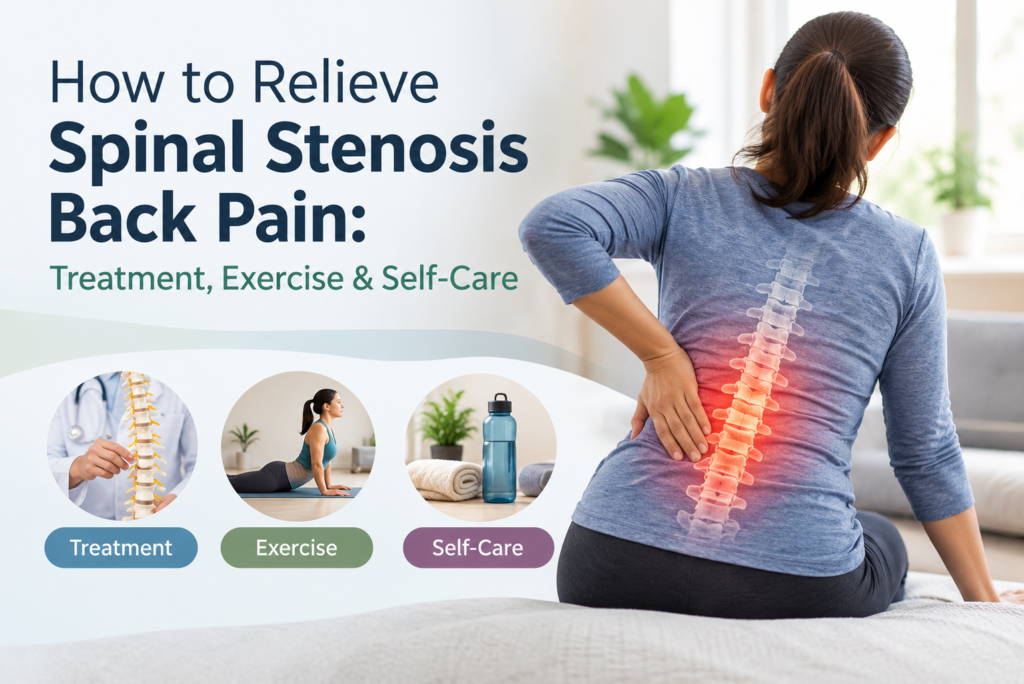
Treatment may include activity modifications, exercise, physical therapy, medication, injections, or surgery, depending on symptom severity and clinical findings. The choice of the right combination is based on clinical findings and symptoms.
This guide covers stenosis back pain relief, practical care, exercise, professional treatment, chiropractic care, and early signs and symptoms that require immediate intervention.
What Is Spinal Stenosis?
With spinal stenosis, the spaces in the spine are narrowed. This can compress the nerves in the lower back (lumbar spine) that run to the buttocks and legs. Lumbar stenosis is the most common form associated with symptoms in the low back and legs and will be described here. The spinal canal and the openings through which nerves travel can narrow, potentially putting pressure on nearby nerve structures.
Narrowing can irritate and compress nerve structures. In turn, this is why symptoms vary widely between individuals. Some individuals with narrowing seen on imaging tests do not experience any symptoms, according to the Mayo Clinic. Others may experience more symptoms than their scans indicate.
These can involve the discs and spinal joints, which change throughout the duration of aging, or changes in the tissues around the spinal canal. These changes typically take place over a long period.
Imaging may not be consistent with symptoms; therefore, a scan is not always able to explain pain. The entire picture must be taken into account by a clinician. To get more background information, read our article on the causes of lower-back pain.
What Does Spinal Stenosis Pain Feel Like?
In the lower back, people often report pain, or there is a general feeling of discomfort. It may be easily affected by posture or movement and is worse when standing than when sitting.
A few people also experience lower back symptoms:
- Buttock or leg pain
- Feeling heavy in the legs
- Cramping
- Tingling
- Numbness
- Weakness
There may be symptoms in either one leg or both. They can also be transient, and the initial impression is easy to shrug off.
What Is Neurogenic Claudication?
Symptoms that begin or become worse with standing or walking are called neurogenic claudication. These symptoms often improve with sitting, resting, or bending forward. This pattern is commonly associated with lumbar spinal stenosis.
It may be a technical term, but the concept is quite simple: Neurogenic claudication is associated with pressure or irritation affecting nerves in the lower spine. Circulation problems can also cause leg pain during walking, so a clinical assessment is important to identify the likely cause. This distinction is part of the reason that an evaluation is important.
Why Bending Forward Feels Better?
A forward-leaning position may afford a bit more room around the damaged nerves for some. It could be why leaning on a shopping cart or sitting down relieves the pain.
Spinal stenosis cannot be diagnosed just by looking at this pattern. There are other conditions that can mimic these, but it’s important to see them the right way.
How to Relieve Spinal Stenosis Back Pain at Home
Home care will help make life at home easier. It doesn’t correct the narrowing. Consider it a strategy to help you control symptoms while you plan a longer-term strategy.
Keep Moving, But Modify the Activity
Complete inactivity is not necessarily helpful. Meanwhile, getting through difficult or worsening symptoms may not be very beneficial. Take regular rest intervals from standing or walking. After that, build up slowly, according to tolerance.
The aim is to change the activity, not to stop moving.
Take Positions That Lessen the Symptoms
Some people find sitting more comfortable than standing for extended periods. A slight forward lean may be more comfortable for others. For some people, a stationary bike will be easier than long periods of walking, too.
This doesn’t work for everyone. Listen to your own body and make adjustments accordingly.
Pace Everyday Tasks
Make small changes:
- Divide up the tasks at home into smaller intervals
- Take breaks for a restful change of pace.
- Don’t hold any position for too long; that causes pain
- Schedule challenging activities based on what is capable of being accomplished at this time
Pacing everyday activities can make self-care advice more practical and help you identify which activities need to be adjusted. It will assist you to recognize activities that your back enjoys and those that require alteration over time.
Heat or Cold for Temporary Comfort
Heat or cold can be helpful for short-term relief for some. Neither affects the narrowing of the spine. Use a cloth barrier and limit your exposure.
Consider Medication Carefully
Many people take over-the-counter pain medications. Medicines may suit different people depending on their health history and other medicines they are taking. People with kidney disease, ulcers, or those who are pregnant or on blood-thinning medications should seek medical advice first. Medications can help relieve symptoms, but they do not treat the stenosis.
Which exercises could relieve spinal stenosis?
No one routine fits all. A good program will be based on your symptoms, strength, mobility, balance, walking tolerance, and overall function. This is why it is important to have a professional’s guidance. It is sometimes better to be consistent than intense. It is better to have short and frequent sessions rather than a prolonged one.
Gentle Flexion-Based Movements
Gentle forward bends may be well tolerated by some patients with lumbar stenosis. Examples include a supported knee-to-chest stretch or a seated forward reach. Perform movements gently and only within a comfortable range. Stop if they increase your pain or other symptoms. Take it easy and stop if symptoms increase. Flexion isn’t for everyone.
Strengthening Exercises For the Hips & Trunk
Improved strength in the hips and trunk will aid in daily activities and fitness. Strengthening does NOT open the spine. Its usefulness is its functionality.
Walking or Cycling
It is best to walk in small chunks with rest periods in between. It may appear easier to cycle because you’re sitting and usually leaning slightly forward. A relatively easy way to do this is to avoid extreme exercise before symptoms are at their highest level; then, after symptoms decrease, resume.
Mobility and Balance
Mobility movements with the hips and legs can help make movement smoother. Balance training can also be used appropriately, as a steady footing is essential to confident everyday functioning. A program should match your current ability level—not an ideal that you are trying to reach.
When to Stop
Don’t do exercises that cause:
- Increasing weakness
- Spreading numbness
- Severe pain
- Significant balance problems
- Other worrisome neurologic symptoms
How Is Spinal Stenosis Treated?
Treatment depends on the clinical assessment, symptom severity, and how much the condition affects daily activities.
Clinical Evaluation
Your symptoms, medical history, and functional limits will most likely be reviewed by a clinician. They might ask you about how far you can walk before symptoms begin; this information can help make decisions.
They will conduct a physical and neurological check-up. When appropriate, imaging, such as MRI, might be considered. This more comprehensive process is described in sources like The Mayo Clinic and Johns Hopkins Medicine.
Physical Therapy
A physical therapist creates care that is tailored to YOU. Sessions can be focused on strength, mobility, walking ability, and functional movement. The goal is to minimize your symptoms and to help you do more of what is important to you. Therapists also instruct pacing techniques and how to modify activities throughout the day.
Medication
Your health care provider may recommend treatment with medication to control symptoms. It is dependent on your health and other medicines you are taking. Always get directions from a qualified professional and never from a general article.
Injections
A specialist can consider guided injections for certain patients who continue to have symptoms that are a problem. Not all results are guaranteed, and some relief will be temporary. Treatment is typically not a single treatment but part of a comprehensive regimen.
Surgery
Surgery may be recommended if symptoms are severe, causing significant function problems, if neurological issues worsen, or if conservative treatment does not adequately alleviate symptoms. This is explored in greater detail below.
Can Chiropractic Care Help With Spinal Stenosis?
Some may benefit from conservative treatment, which can include chiropractic or manual therapy. It depends upon your symptoms, evaluation, functional limitations, and general health.
Symptoms, movement, and function are the focus. This is not the reverse of anatomical narrowing, and chiropractic does not cure stenosis. It should also not be used as a substitute for medical evaluation in the presence of neurological symptoms. Sometimes the best course is to coordinate with other health care providers.
Visits typically start with history-taking and examination. The manual therapy, movement guidance, and activity suggestions might then include hands-on assistance with walking or standing longer in relation to a goal. If your exam indicates that you need another professional’s assistance, a competent examiner will state this.
Allied Chiropractic Therapy of Taylorsville, UT, recognizes that different people will require different treatments and aims to have a functional objective in mind when addressing stenosis. The team has a strong commitment to conservative treatment. They refer appropriately when symptoms indicate a need for medical or specialist input.
When Does Spinal Stenosis Require Surgery?
If you have a scan and have spinal stenosis, this does not necessarily mean surgery. If symptoms and the clinical situation are appropriate, many people start their treatment with conservative approaches.
Surgical consultation may be warranted if symptoms significantly interfere with activities of daily living with conservative treatment. Progressive neurological symptoms may affect treatment decisions and warrant prompt medical evaluation. Decompression procedures are used to help alleviate pressure on the affected neural structures.
This decision is based on your symptoms, your function, your neurological exam, and your response to conservative treatment. Narrowing alone is not sufficient. The whole clinical picture is considered by a spine specialist.
Spinal stenosis surgery is considered according to symptom severity, functional limitations, neurological findings, and response to nonsurgical treatment. A spine specialist can explain the potential benefits, risks, alternatives, and expected recovery for the recommended procedure.
When Should You Seek Medical Care for Back Pain?
Symptoms of most stenosis develop slowly, but there are changes that warrant a quicker response. Self-care has limits. You can have a professional evaluation if:
- Symptoms continue or worsen to interfere with life’s functions more and more.
- Your ability to walk is decreasing.
- The numbness or tingling is increasing or worsening
- Notice weakness in the legs
- Pain is affecting sleep, work, or normal movement
If a doctor’s help is needed, go to the hospital right away for:
- Recent inability to control bladder or bowel functions
- New tingling or loss of sensation in the groin, buttocks, or inner thighs
- Weakness in legs that is getting worse quickly
- New foot drop
- When trauma is severe, there will be severe reactions after the event.
- Back pain and fever or unexplained weight loss
If you don’t know if the symptoms are emergent, get checked. Moreover, if there are signs that an emergency is happening, don’t wait for the regular appointment.
Most often, spinal stenosis back pain relief involves symptom management and function improvement, rather than reversing the narrowing of the spine. Depending on the individual, all of these can be involved—activity changes, exercise, physical therapy, medications, injections, and surgery. However, none of them are a cure. Not all the symptoms are appropriate for use in a home-care plan.
An urgent medical assessment is warranted for worsening neurologic signs. For appropriate patients seeking conservative care, Allied Chiropractic Therapy can be a starting point, with referral when symptoms call for medical or specialist assessment.
Frequently Asked Questions
Is it possible to cure spinal stenosis without surgery?
Conservative approaches are used in many cases as a first line of treatment depending upon symptom severity and clinical findings. It is not usually aimed at reversing the narrowing but instead at achieving better pain control, mobility, and function. Things may change slowly.
Which of the following positions is typically helpful for relieving pain from spinal stenosis?
Others prefer to be sitting or leaning slightly forward. This is particularly common with symptoms occurring in a neurogenic claudication pattern.
Which physical activities or exercises are beneficial for spinal stenosis?
It varies. A program may include strengthening exercises, mobility exercises, walking or bicycling, and movements that are comfortable for the person.
Does walking hurt or aggravate spinal stenosis?
Walking may worsen symptoms for some, especially those having neurogenic claudication. It is not a reason to ban walking everywhere. Activity may be adapted and graduated to tolerance.
Which symptoms of spinal stenosis are serious?
Any bladder or bowel issues, extreme or sudden muscle weakness, and numbness around the saddle are serious. If any of these occur, DO NOT wait for them to go away; seek immediate medical assistance.